Give Your Athlete 8 Weeks. They'll Stop Playing Scared.
Mindset Arena teaches basketball players ages 13-17 how to recover from a mistake instead of spiraling, take hard coaching without falling apart, and stop letting other people decide who they are.
- 100% online. Coached by Marko Zelic, Mental Performance Coach.
- Starts Monday, October 12. Applications close Thursday, October 9.
Takes 3 minutes. Not everyone gets in. 12 players this round.
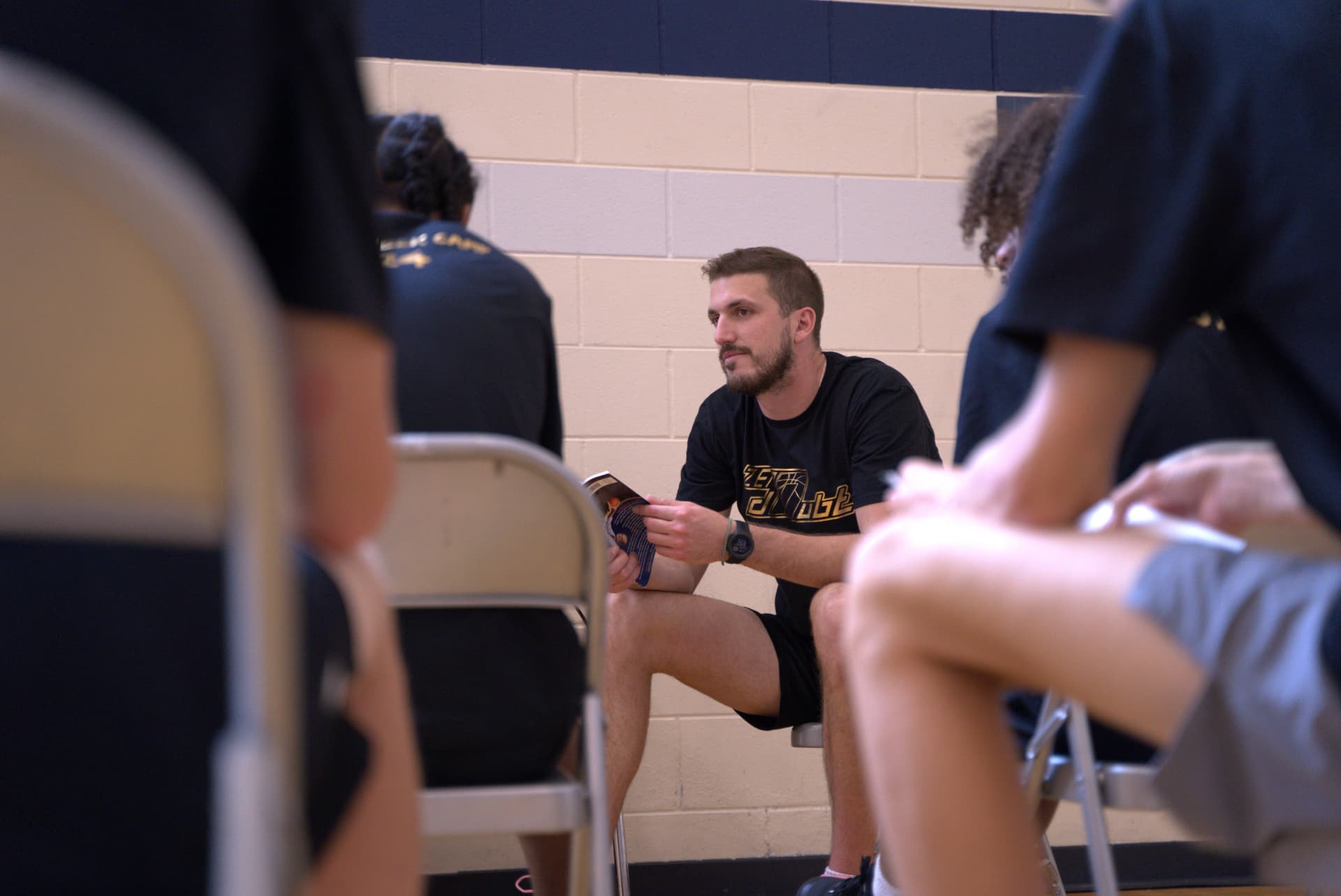
Marko during mental performance session in Parker, CO. Mindset Arena brings the same coaching to players anywhere in the country, fully online.
11 spots remaining
1 of 12 already reserved · Applications close Thursday, October 9
This is built for your kid if:
They're hard on themselves
One bad possession and they're already talking down to themselves in their head.
They hesitate
They pass up open shots they'd hit every time in the driveway.
They don't believe in skills they actually have
You've watched them do it in practice. It doesn't come out in the game.
They get down when the coach gets on them
And it takes a quarter to get back to normal.
They shrink when people are watching
Family in the stands, a packed gym, the free throw line with the game close.
They compare themselves
To teammates and to Instagram, and come away smaller every time.
These are kids who already care. Nobody has to make them go to the gym. What nobody ever taught them is how to manage the part of the game that happens between their ears.
The problem
You've watched at least one of these.
Your kid goes to the line with the game close and the gym goes quiet. They've made a thousand of these in an empty gym. Both miss.
They get a wide-open look. The same shot they hit over and over in the driveway. It isn't close. And they don't ask for the ball again the rest of the night.
The coach gets on them in front of everybody, and something goes out of them. They're still on the floor. They're not really in the game.
You brought family. Grandparents in town, their friends in the stands. That's the night your kid plays the smallest you've ever seen them play.
Then you sit in the car afterward and don't know what to say, because anything you say makes it worse.
Different moments, same 3 seconds. Your kid made a mistake, or felt eyes on them, and somewhere in the next four seconds they decided it meant something about them. Not about the play. About who they are as a player. Once that happens they're not competing anymore. They're protecting themselves.
They're not playing to win. They're playing not to mess up.
And it's not your kid's fault. Nobody ever taught them how to do this.
Think about what's actually available to a young player right now. Skills trainers. Shooting coaches. Strength and conditioning. AAU. Camps. Exposure tournaments. Highlight editors. Recruiting services. There is an entire industry built around this kid, and every single piece of it sells the same thing: more skill, more reps, more film, more exposure.
Not one part of it has a product for the four seconds after a miss.
So the kid gets better and better at basketball, and nobody ever teaches them what to do at the line when the gym goes quiet, or when the coach yells, or when they can feel their family watching, or when a teammate they used to be better than is suddenly starting ahead of them.
Something you can use tonight
Whether or not you enroll.
After the next bad game, don't ask "what could you have done better?"
Ask "what's one thing you'll do better next time?"
It sounds like the same question. It isn't. The first sends your kid back into the game they already lost and makes them relive it. The second points them forward and gives them somewhere to put the feeling. Same information, completely different result.
That's the level this program works at. Small, specific, and attached to a moment that already happens.
What your player learns
Eight weeks. One tool at a time.
The 3-second rule that stops one miss from ruining three quarters. Not "shake it off." An actual sequence, with a trigger that fires the moment it happens.
Your kid thinks they're not a shooter, right? Wrong. The danger isn't that the belief is false. It's that believing it stops them from shooting, which makes it true.
What to do at the free throw line when the gym goes quiet. The routine isn't about the shot. It's about where their attention goes in the four seconds before it.
Why your kid plays worse when you're in the stands, and what to do about it. This isn't about you. It's Week 7, and almost every player has a version of it.
What to do the moment a coach starts yelling. One breath, one sentence. Players who learn this absorb hard coaching better than players who can't, and their coach notices long before you do.
If your kid has gone six weeks without visible improvement, Week 8 is the most important week of the program. That flat stretch is where almost every player quits, and almost none of them know it's normal.
The three places a teenager's self-image comes from. Two are obvious. The third is the one nobody tells them about, and it's the only one they control.
Why "just be confident" has never worked on your kid and never will. There is not one affirmation in this program. Not one. Here's what replaces them.
The two kinds of confidence, and why the kind most players have collapses the second the shots stop falling.
What never to say in the car after a bad game. Most parents say it every time. There's a version one word different that does the opposite.
How to use anger and frustration as fuel instead of pretending they don't feel it. There are no bad emotions. Only bad reactions to them.
The daily habit that survives a bad week, and the specific reason most kids quit a habit on day nine. It has nothing to do with discipline.
How to lead a team without a title, and why leadership is given, not taken.
How to talk to you honestly without going silent or blowing up. Most kids only have those two settings. Week 7 teaches a third.
The difference
Why this isn't just motivational content
Your kid can watch a motivational video for free right now. It'll fire them up for a day and change nothing. Three things make this different, and all three are deliberate.
Every tool has a trigger and a follow-through.
The question Marko asked over and over while building this was: "When will they actually use it?" No tool goes in unless there's a specific moment on the court that fires it, and a specific place it gets reviewed. Nothing here is a worksheet your kid fills out once and never opens again.
Confidence comes from evidence, not affirmation.
There are no affirmations in this program. Telling a kid to repeat "I am unstoppable" when they don't believe it does nothing, and they know it's fake. The daily audio workouts have players recall their own actual proof instead. Things they've already done. That's what holds up when the game is close.
A private weekly check-in with the coach.
At the start of every live call, players fill out a short weekly check-in: how many days they completed the Daily Standard and journaling, plus a reflection on their week. It's not shared with the group. Marko reads it privately, so he knows where each player is and can push them or adjust the program accordingly.
How it works
Every day
The Daily Standard — a short bodyweight routine, done every single day
The day's audio workout — 3 to 5 minutes
A 3-question journal — to close out the day
Every week
One or two video lessons — 20 to 40 minutes, filmed with the worksheet on screen
One worksheet — your player's own editable copy
A post to the private community — a commitment, a value, an act of service
A live Q&A call with Marko — where the week's work gets reviewed
A weekly check-in at the start of the call — players log days they journaled, completed the Daily Standard, and reflect on their week
A short email to you — covering what we worked on
The eight weeks
Clearing The Clutter + The Goal Blueprint
The four-level goal system, and the in-game recovery tool.
Game Time Identity + Facing Fear
Building a switch they can flip, then facing one basketball fear and one real-life fear.
Playing With Emotion
Channeling anger and frustration instead of spiraling.
Growth Mindset
What they actually control, and what they don't.
Identity
Where the story your kid tells about themselves came from, and how to take the pen back.
Leadership
Influence, self-leadership, and one act of service every day.
Pressure and the Love of the Game
Coaches, parents, comparison, and how to talk to you honestly.
The Long Game
How to keep all of it once the program ends.
Results
What players from the first cohort said
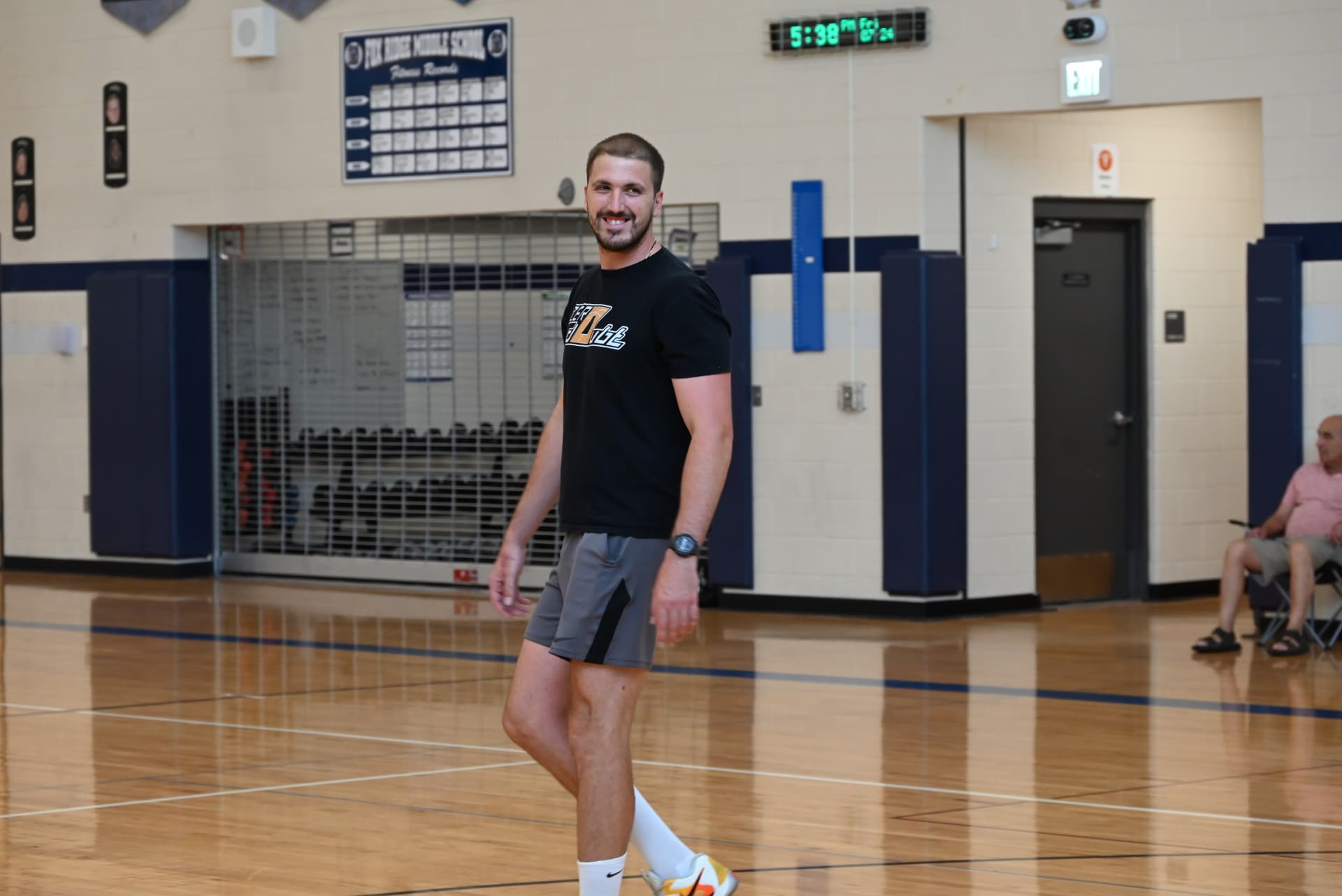
WHY I BUILT THIS
I built Mindset Arena because I know how it feels.
To be afraid to make a mistake. To hide from the ball because you don't want to be the one who misses. To feel the anxiety before a game and have nowhere to put it. To play a whole season below what you're actually capable of, and know it.
I lived that. For years.
So I built the thing nobody built for me. Not just so these players have a mental performance coach, but so they have someone who actually understands what's going on in their head. Someone in their corner. A friend, not only a coach.
I believe every player who goes through these eight weeks comes out a different player. And a different person.
The offer
Mindset Arena — Fall Cohort
Starts Monday, October 12. Eight weeks. Fully online.
8 weeks of video lessons
12+ lessons, filmed with the work on screen
The Daily Standard
A daily physical routine, progressing every week
8 worksheets
Your player's own editable copy of each
Daily audio workouts
Recorded in Marko's voice
8 live Q&A calls with Marko
Talking about current lesson and asking questions
Nightly journal
The mechanism that makes it stick
Private community access
Public commitments, accountability partners
Weekly parent email
What we covered, and what to ask your player
Look at what you already spend on your athlete.
A season of AAU runs well over a thousand dollars once you count travel. Private skills training runs $80 to $150 an hour, so four sessions is roughly this whole program. A sports psychologist runs $150 to $250 a session, and eight sessions would cost you triple this.
Every one of those buys your kid more basketball. This is the only one that works on the part of them that decides whether the basketball shows up on a night that matters.
$497
First 4 players to sign up: $447.
12 players this round. Applications close Thursday, October 9.
The guarantee
If your athlete shows up, puts in the effort, completes the assignments, and stays engaged throughout the program, and doesn't improve their confidence, mindset, and ability to handle pressure on the court, I'll refund every penny.
No hard feelings. No questions asked.
Who this isn't for
Straight talk, so nobody wastes money.
Not for you if you want your kid to get better without your kid doing anything. There's a routine every day, a nightly journal, a weekly worksheet and a live call. It's ten to twenty minutes a day. But it's ten to twenty minutes a day, every day, for eight weeks.
Not for you if you're looking for a quick fix before tryouts. Eight weeks is eight weeks. There's no version of this that works in a weekend.
Not for you if you're expecting a scholarship promise. Nobody here will tell you what your kid will be at eighteen. Basketball is the classroom. It was never the subject.
And if your player isn't coachable right now, this isn't the moment. I'd rather tell you that on an application than take your money and spend eight weeks fighting a kid who doesn't want to be there.
FAQ
Questions parents ask
Your kid already has people working on their skills.
This is the eight weeks where they learn mental game.
$497 · First 4 players $447 · 100% online · Starts Monday, October 12 · Applications close Thursday, October 9 · 12 players
Full refund if they do the work and nothing changes.